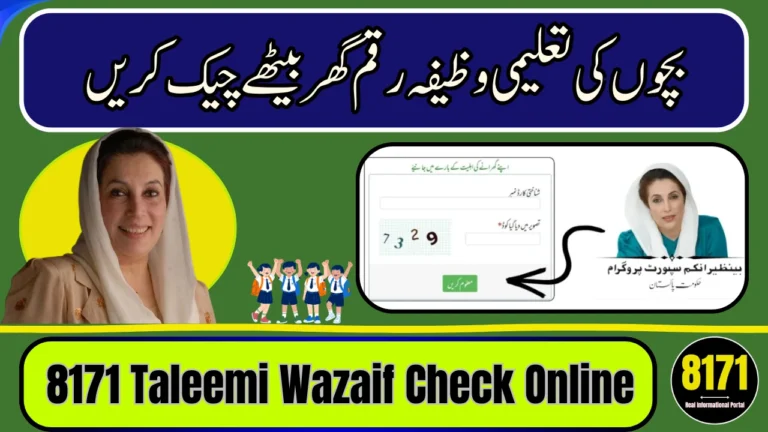

If your BISP installment is delayed or marked “Under Verification,” you must complete the BISP 8171 payment verification process immediately. Payment is only released after CNIC confirmation, NSER data validation, and biometric verification at authorized centers.
You can first verify your payment status by sending your 13-digit CNIC to 8171 or checking through the official 8171 web portal. If eligible, the system will show “Payment Released.” If not, follow the steps below to avoid delays.

What Is BISP 8171 Payment Verification?
Payment verification ensures that:
-
Your CNIC is valid and active
-
Your NSER data is updated
-
Your PMT score meets eligibility criteria
-
Biometric thumb verification matches NADRA records
Without successful biometric confirmation, payment cannot be issued.

Step-by-Step Payment Verification Process
-
Send CNIC to 8171 or check online portal
-
Confirm eligibility status
-
Visit designated BISP payment center
-
Complete biometric thumb verification
-
Receive payment receipt after successful match
Always carry your original CNIC. Expired CNIC may cause rejection.

Required Documents
| Document | Purpose |
|---|---|
| Original CNIC | Identity confirmation |
| Registered SIM | SMS updates |
| Survey Update (if required) | Eligibility review |

Why Payments Get Blocked
-
Biometric mismatch
-
Expired CNIC
-
Outdated NSER survey
-
High PMT score
In case of fingerprint failure, visit NADRA for record update before retrying.

Conclusion
The BISP 8171 payment verification process is simple but mandatory. Check your CNIC status, complete biometric verification, and ensure your data is updated to receive payments without interruption.
FAQs
How do I check BISP payment status?
Send your CNIC to 8171 or use the official web portal.
What if biometric fails?
Update fingerprints at NADRA and retry verification.
Is there any verification fee?
No, the process is completely free.
How long does verification take?
Usually instant after biometric confirmation.
Can someone else collect my payment?
No, biometric verification requires the original beneficiary.